

Natural Look and Feel
Implants look, feel, and function like natural teeth, restoring your smile and letting you eat and speak with confidence.
Accepting New Patients
Missing one tooth or several? Dental implants offer a permanent, natural-looking replacement that looks, feels, and functions like your own teeth. Dr. Zhang uses advanced planning and precise placement to restore your smile with dental implants in Fullerton, CA.
10,000+
Procedures Performed
Same-Day
Emergency Care
Most PPO
Plans Accepted
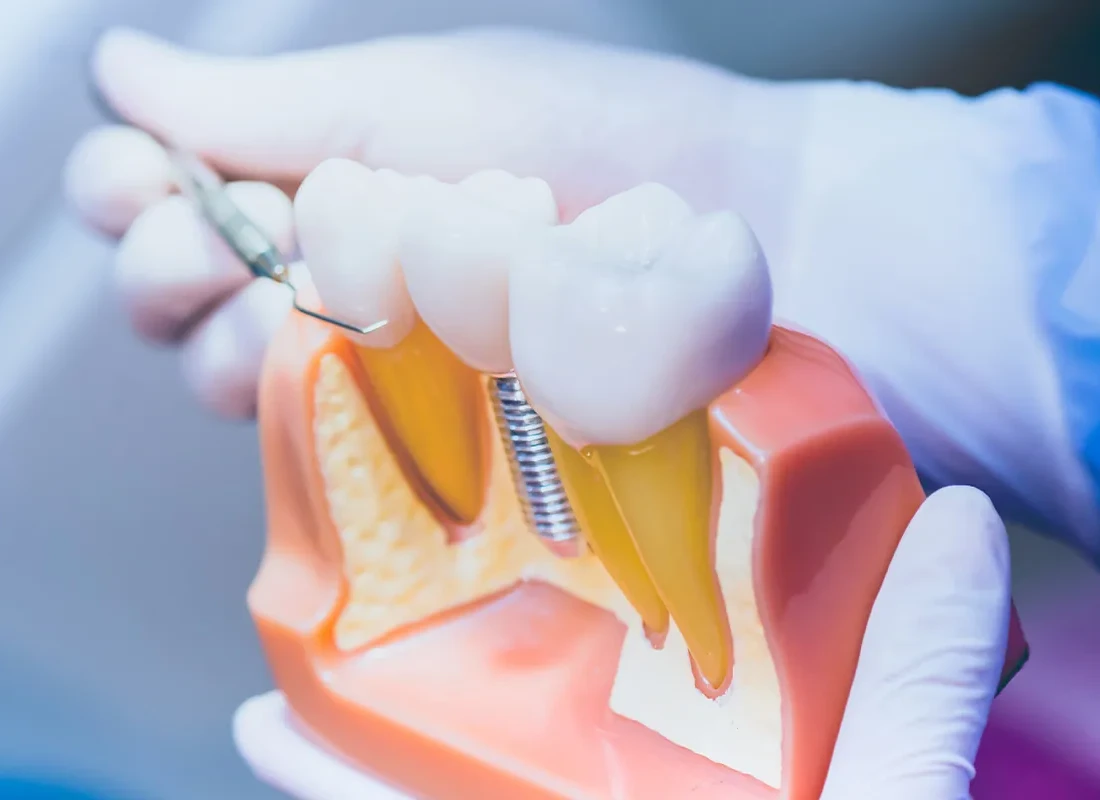
A dental implant is a long-term tooth replacement that closely mimics a natural tooth. It has three parts: a titanium post placed in the jawbone to act as a root, an abutment that connects to the post, and a custom crown, bridge, or denture on top. Because the post fuses with your bone, an implant becomes a stable, permanent part of your smile that can last for years.
Implants look, feel, and function like natural teeth, restoring your smile and letting you eat and speak with confidence.
With proper care, dental implants can last for many years, making them one of the most durable tooth replacement options.
Implants stimulate the jawbone like natural roots, helping prevent the bone loss and facial changes that follow missing teeth.
Because an implant stands on its own, it replaces a tooth without relying on or altering your healthy neighboring teeth.
From your first exam to the final result, here's exactly what to expect — calm, clear, and never rushed.
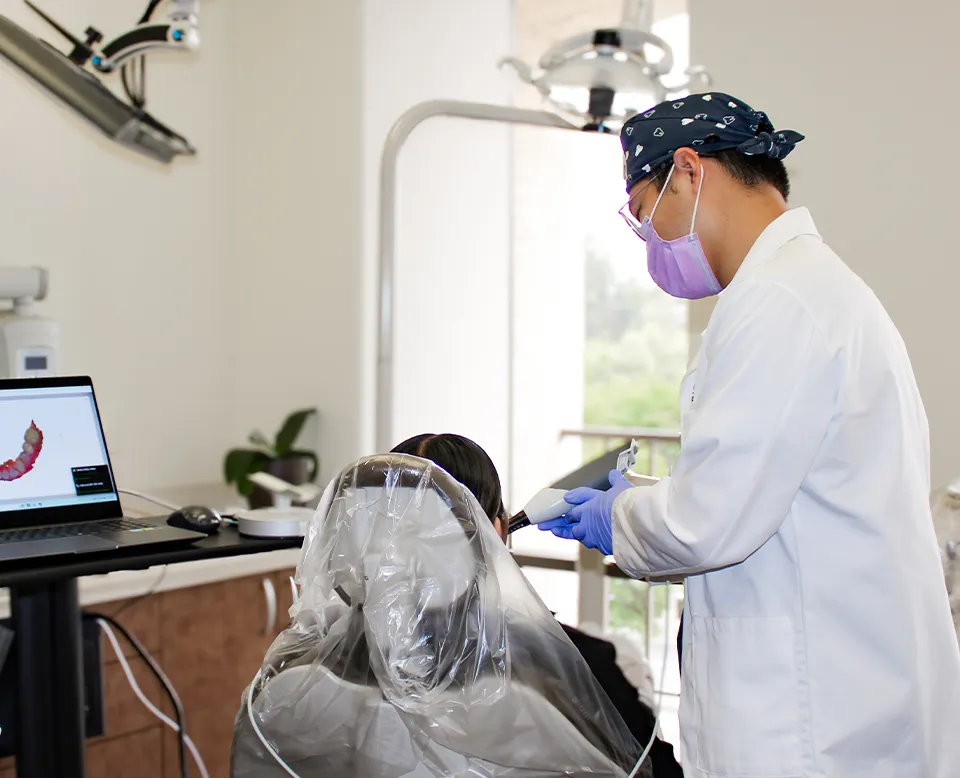
Request an AppointmentDr. Zhang evaluates your oral health and uses advanced imaging to plan precise, personalized implant placement.
A small titanium post is placed into the jawbone under local anesthesia, becoming the foundation for your new tooth.
Over the following months, the implant fuses with your bone in a process that creates a strong, stable foundation.
Once healed, we attach a custom crown, bridge, or denture, completing your smile with a natural-looking result.
You have one or more missing teeth and want a permanent, natural-looking replacement.
You wear dentures that slip or feel unstable and want a more secure, permanent solution.
Gaps in your smile are making it hard to eat comfortably, affecting your diet and daily life.
You have healthy gums and enough bone to support an implant, or you are open to a bone graft to build that foundation.
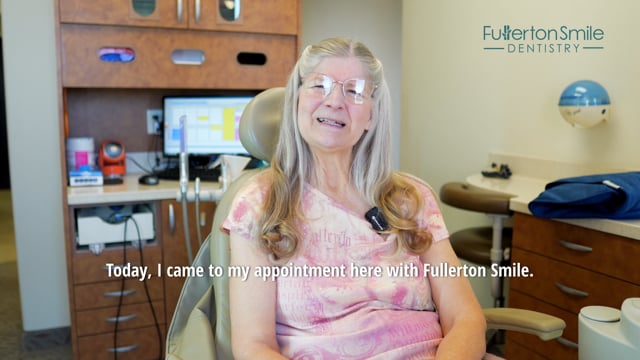
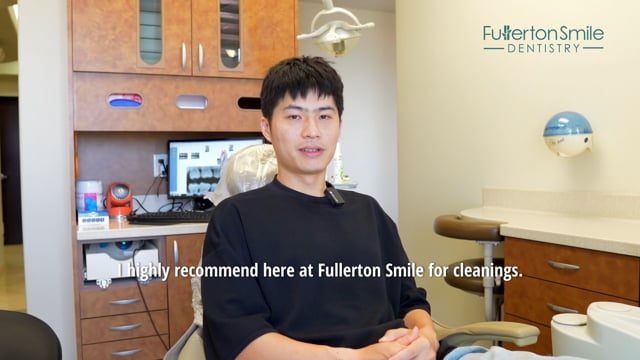
Our patients return year after year for calm, unhurried care and honest, personalized guidance.
We go above and beyond to make dental implants feel calm and effortless — pairing the latest technology with a gentle, unhurried approach designed entirely around you.
Here are just a few reasons our patients love us:
Don't see the answer you're looking for? Call us at (714) 526-4867.
We offer several options to fit your needs. Single-tooth implants replace one missing tooth with a post and crown. Implant-supported bridges replace several teeth in a row. All-on-4 implants support a full arch of teeth with just four posts. Implant-supported dentures, sometimes called overdentures, snap securely onto a few implants for added stability. Dr. Zhang will recommend the best option for your smile.
Yes. Implants are made from biocompatible titanium that integrates naturally with your bone. They have a long track record as a safe, reliable, and highly successful tooth replacement option.
With good oral hygiene and regular checkups, dental implants can last for many years and often a lifetime. The crown or restoration on top may eventually need replacement, but the implant itself is built to last.
Often, yes. If you do not have enough bone to support an implant, a bone graft can rebuild the foundation first. Dr. Zhang will evaluate your jaw and let you know whether grafting is needed.
Both are excellent options. An implant stands on its own without altering neighboring teeth and helps preserve bone, while a bridge relies on adjacent teeth for support. Dr. Zhang will help you choose the right fit for your needs and budget.
This is an important question, since healthy gums are the foundation for a successful implant. Active gum disease needs to be treated and brought under control before implants are placed, because infection and bone loss can compromise how well the implant integrates. The good news is that gum disease doesn’t permanently rule out implants for most people. Once your gums are healthy and any lost bone is addressed, the team at Fullerton Smile Dentistry can evaluate whether you’re ready to move forward successfully.
Yes. Smoking is one of the biggest risk factors for implant complications. It restricts blood flow to the gums, slows healing, and interferes with osseointegration, the process by which the implant fuses with your bone. This raises the chances of infection and implant failure, both during recovery and long-term. While smokers can still receive implants, quitting—or at least pausing around the time of surgery and healing—greatly improves your odds of success. Fullerton Smile Dentistry can offer guidance and support to help protect your investment.
This is a common and understandable question, especially for frequent travelers. The reassuring answer is no—dental implants will not set off airport metal detectors. Implants are made from titanium, which is lightweight, non-magnetic, and used in such a small amount that security scanners won’t react to it. You can travel with complete peace of mind and won’t need any documentation for your implants. If you ever have questions about the materials used in your restoration, the team at Fullerton Smile Dentistry is happy to explain.
The cost of dental implants depends on a few factors, including the scope of your treatment plan and whether additional imaging or procedures are needed. During your visit, we'll walk you through a clear, itemized estimate before anything begins — no surprises. At Fullerton Smile Dentistry, we work closely with most insurance providers to maximize your benefits, and we offer flexible financing options and new patient specials to make quality care comfortable for every budget.
Restore your smile with a permanent, natural-looking solution. Dental implants let you eat, speak, and smile with complete confidence again. Dr. Zhang will design a personalized plan to rebuild your smile.
 25+ Years of Care
Endosteal Implants Implants that are surgically placed into the jawbone. This is the most common type.
Subperiosteal Implants Implants that are placed on top of the jawbone but beneath the gum tissue. These are less common and used when there is not enough bone height for endosteal implants.
Zygomatic Implants Implants that are placed in the cheekbone (zygoma) when there is not enough bone in the upper jaw. This is a more complex procedure.
Abutment A connector piece that attaches the implant to the artificial tooth (crown, bridge, or denture).
Crown The artificial tooth that is attached to the abutment.
Implant Fixture The titanium post that is surgically placed into the jawbone.
All-on-4 A technique that uses four implants to support a full arch of replacement teeth.
All-on-6 Similar to All-on-4, but uses six implants for increased support and stability, especially in cases with less bone density.
All-on-X A general term for full-arch implant restorations that use a variable number of implants (usually 4 or more) depending on individual needs.
Bone Grafting A procedure to add bone to the jaw when there is not enough bone to support an implant.
Flapless Surgery A minimally invasive implant placement technique that involves making a small incision in the gums.
Guided Implant Surgery Using 3D imaging and computer technology to plan and place implants with greater precision.
Immediate Load Implants Implants that can support a temporary tooth replacement on the same day they are placed.
Osseointegration The process by which the implant fuses with the jawbone.
Implant-Supported Bridge Several implants are used to support a fixed bridge of replacement teeth.
Implant-Retained Overdenture A removable denture that snaps onto implants for increased stability and retention.
Multi-tooth Implants Replacing multiple missing teeth with individual implants or an implant-supported bridge.
Biocompatibility The ability of a material to function in the body without causing harm.
Crown Lengthening A surgical procedure to expose more of the tooth structure for implant placement.
Sinus Lift A procedure to add bone to the upper jaw in the sinus area.
Titanium A strong, lightweight metal that is biocompatible and commonly used for dental implants.