

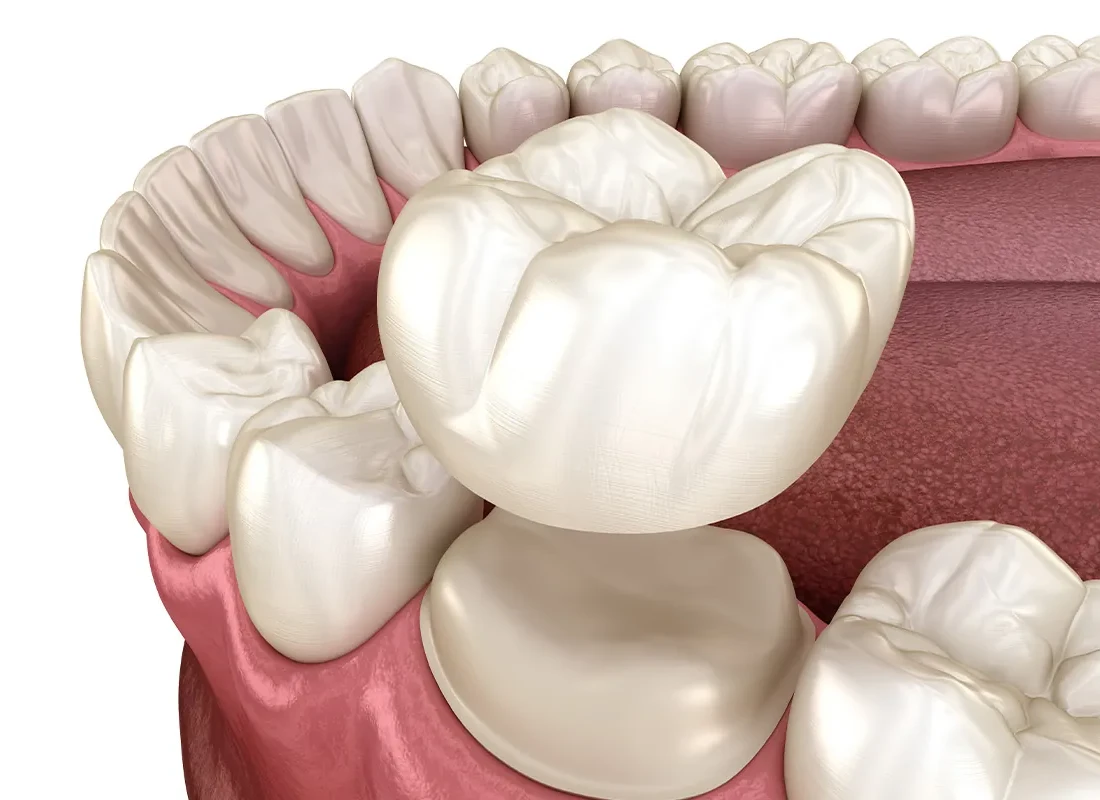
A tooth usually needs a crown when too much of it is damaged.
When does a tooth actually need a crown instead of a simpler fix? In short, a tooth tends to need a crown when so much structure is damaged that a filling cannot hold or protect it. A dental crown is a cap that covers the entire tooth to restore its strength, shape, and function. Cracked teeth, large old fillings, and root-canal-treated teeth are the classic cases where dental crowns make sense. Knowing the signs helps you understand why one is recommended.
Key Takeaways
-
A tooth usually needs a crown when too much structure is damaged for a filling. A crown covers and protects the whole tooth.
-
Common reasons include cracks, large fillings, and root canal treatment. Heavy wear can also call for one.
-
Crowns restore strength so a weakened tooth can handle everyday chewing. They help prevent painful fractures and breaks.
-
Waiting too long can turn a crownable tooth into a lost one. Early treatment saves more of the natural tooth.
-
A dentist confirms the need with an exam and X-rays. The decision hinges on how much healthy tooth remains.
When Does a Tooth Need a Crown?
A crown steps in when a tooth needs full coverage to survive. According to the Journal of the American Dental Association, crowns repair teeth that are misshapen, damaged, or weakened by large fillings or root canal treatment. The common thread is that the tooth no longer has enough sound structure to support a simple filling. A crown wraps the whole tooth to hold it together.
What Are the Signs You Need a Crown?
A few situations reliably point toward a crown. How do I know if my tooth needs a crown? Most of the time it comes down to how much healthy structure is left, since a tooth that can no longer support a filling needs something that wraps around it instead. These are the most common:
- Large Cavity. When decay is too big for a filling, a crown restores the tooth. A filling that large could crack the tooth.
- Cracked Tooth. A crown holds a cracked tooth together and stops the crack from spreading. It protects the tooth from splitting.
- After Root Canal. A treated tooth becomes brittle and needs coverage. A crown shields it for the long term.
- Worn or Broken. Heavily worn or broken teeth often need a crown to rebuild them. It restores both shape and strength.
- Failed Filling. A large old filling that keeps failing may call for a crown. The crown gives more lasting support.
What Happens If You Wait?
Delaying a needed crown lets a small problem grow. A weakened tooth can crack further or break under normal chewing, sometimes past the point of saving. What might have been a crown can become a root canal or an extraction. Acting early keeps more of your natural tooth intact.
What Is Getting a Crown Like?
The process is routine and usually takes about two visits. The tooth is gently shaped, an impression or scan is taken, and a temporary crown protects it while the final one is made. At the second visit, the custom crown is checked for fit and bite, then bonded in place. Most people find it comfortable and straightforward.
Frequently Asked Questions
Can a filling be used instead of a crown?
Only if enough healthy tooth remains to support it. Once too much structure is gone, a filling can fail or crack the tooth, so a crown is the safer choice.
How long do dental crowns last?
With good care, crowns commonly last a decade or more. Daily cleaning and regular checkups help them last even longer.
Does getting a crown hurt?
The procedure is done with local anesthesia, so it is comfortable. Mild sensitivity afterward is normal and fades quickly.
Are There Alternatives to a Crown?
Sometimes a smaller repair will do, depending on the damage. For moderate damage, an inlay or onlay can restore a tooth while preserving more natural structure. For minor issues, a filling may still be enough. When too much tooth is gone, though, a crown remains the most protective option.
How Do You Care for a Crown?
A crowned tooth is easy to look after, much like a natural one. Brush twice a day, clean between your teeth, and keep up with your checkups. Avoid chewing ice and very hard foods, which can chip any restoration. With good habits, a crown can protect your tooth for many years.
Do Crowns Look Natural?
Modern crowns are designed to blend right in. Porcelain and ceramic options are color-matched to your surrounding teeth, so they look and feel like your own. Most people cannot tell which tooth has the crown. The result is strength and a natural appearance in one.
Stronger, Sooner
A tooth needs a crown when protection matters more than a patch, and catching that moment early makes all the difference. Dental crowns restore strength to a weakened tooth so it can keep working for years. If a tooth has you wondering, a quick exam and a set of X-rays give you the answer.
- If you want to learn more about when you need a crown, visit our Dental Crowns in Fullerton, CA, page to schedule a consultation.