

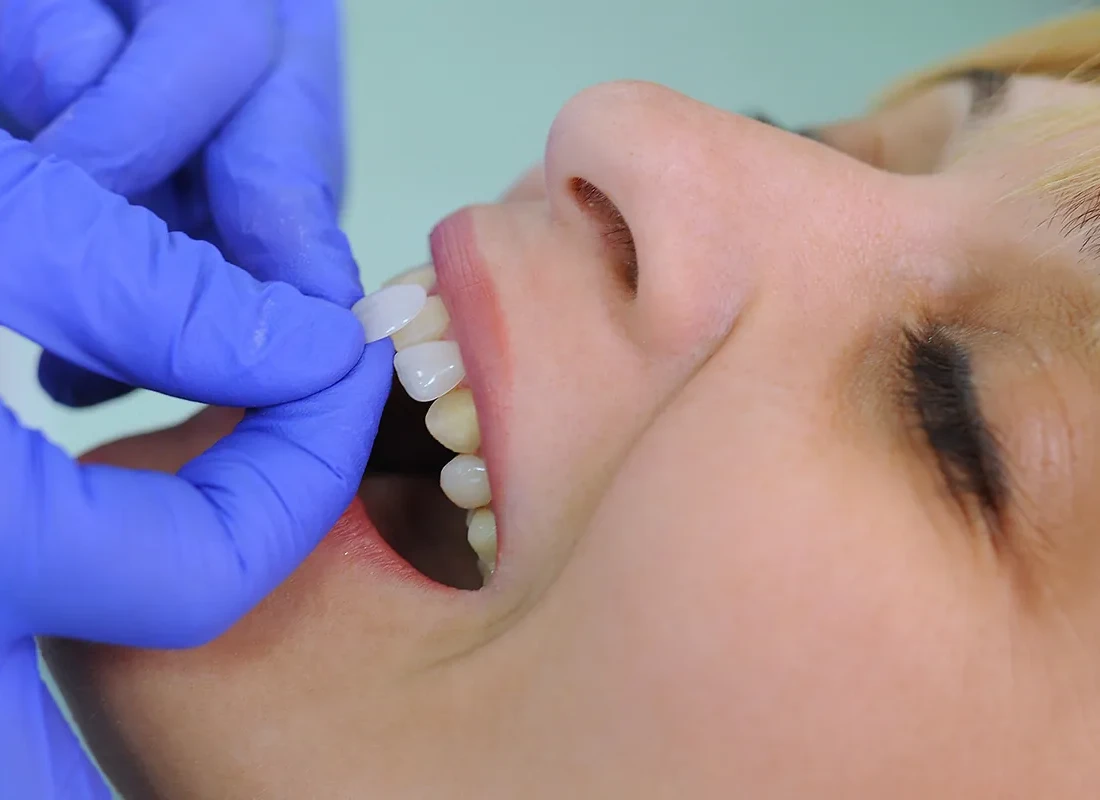
A veneer can change the look of a tooth, but the decision rests on enamel, habits and expectations.
Are veneers worth it? The answer depends on three things. The teeth need to be healthy, habits like grinding should not threaten the veneer, and a permanent change to the enamel should feel acceptable in exchange for the look.
Veneers are thin, custom-made coverings bonded to the front of teeth to change their shape, color or spacing. A dentist can help weigh the points below at a consultation before any treatment begins.
Quick Answer
Veneers can be worth it for a person with healthy teeth who wants to change the shape, color or spacing of a tooth and accepts that most porcelain veneers require removing a thin layer of enamel. They are a poorer fit with decay, gum disease, grinding or a deep overbite. A dentist can help weigh these points.
Key Takeaways
- A veneer covers only the front of a tooth, while a crown wraps the whole tooth.
- Placing most porcelain veneers removes some enamel, and that change cannot be undone.
- Decay and gum disease need treatment first, because covering unhealthy teeth may worsen problems.
- Clenching, grinding or a deep overbite can make a veneer a poor choice.
- Porcelain resists stains and wear better, while composite may need fewer visits.
What Can a Veneer Change?
A veneer can change how a tooth looks. According to MouthHealthy from the American Dental Association, a veneer can improve teeth that are chipped or broken, stained, or crooked or misshapen. It can also mask gaps in a smile.
A veneer covers only the front surface of a tooth, which sets it apart from a crown that covers the entire tooth. That difference matters when deciding, because a veneer is a cosmetic change to the front of the tooth and not a repair of the whole tooth.
How Do Porcelain and Composite Compare?
Porcelain resists stains and wear better, while composite may need fewer visits. A porcelain veneer is a thin shell made to fit the front of a tooth, and it is strong, long-lasting and natural-looking. It also tends to be the more expensive option.
A composite veneer is made from tooth-colored filling material bonded directly to the tooth. It may need less enamel removed and fewer visits, and it can be repaired if it is damaged. The trade-off is that composite is not as resistant to stains or wear as porcelain.
What Does Losing Enamel Mean for the Decision?
Losing enamel means the change cannot be undone. For a porcelain veneer, the dentist removes a small amount of enamel from the front and sides of the tooth so the shell can bond properly.
Some people consider that a fair trade for a smile they like. Others decide against a veneer for that reason, and a dentist can explain which options need little or none.
Who Makes a Good Candidate for a Veneer?
A good candidate has a healthy mouth first. A dentist must treat issues such as decay or gum disease before a veneer goes on, because covering unhealthy teeth may worsen existing problems.
Habits count too. A person who clenches or grinds their teeth, or who has a deep overbite, may not be a good fit, because the extra force can damage a veneer. A dentist can check for these habits at the consultation.
How Is the Shade Chosen?
The dentist helps choose a color shade that matches the natural teeth before the veneer is made. For a porcelain veneer, the dentist takes an impression or a 3D scan and sends it to a dental lab, where a technician makes the shell. A temporary veneer may be worn until the permanent one is ready.
Choose the shade carefully, with the dentist’s help. It is fixed before the veneer is made, but natural teeth can keep darkening with coffee, tea and age, so the two colors can drift apart.
What Does Caring for a Veneer Involve?
Caring for a veneer means caring for the tooth under it. Brush with fluoride toothpaste twice a day and clean between the teeth, because cavities can still form under or around a veneer. Avoiding fingernail biting and hard foods or objects protects the edge of the shell.
Coffee, tea and red wine can discolor a veneer over time, composite more than porcelain. A mouth guard is the usual advice for anyone who plays a sport or does an activity that could injure the mouth. A veneer may feel unfamiliar for a few days, and a bite that feels wrong after placement should be corrected by the dentist.
Why Should a Licensed Dentist Place a Veneer?
A licensed dentist should place a veneer because treatment by an unlicensed person can carry risks of infection and nerve damage. The American Dental Association has warned the public about “veneer technicians,” who offer services that remove the dentist from the process. An unlicensed provider may also place a veneer over a tooth that is already unhealthy without realizing it.
Before treatment, check that the provider is licensed to offer dental services in the state where the treatment takes place.
Frequently Asked Questions
Does insurance cover veneers?
Insurance may not cover veneers, because they are cosmetic, unless they are deemed medically necessary. Purely cosmetic treatments are often not covered. The office team can review a plan’s benefits and talk through flexible financing before treatment begins, so ask about both at the consultation.
What happens if a veneer chips or comes loose?
Over time any veneer may chip, crack, wear down or loosen. The dentist can re-bond, repair or replace it, and a composite veneer can be repaired if it is damaged. Call the office if a veneer feels loose or a bite feels wrong, so the dentist can check it.
Can a veneer be placed over a tooth with decay?
Treat the decay first. A dentist must treat decay or gum disease before a veneer goes on, because covering unhealthy teeth may worsen existing problems. After the dentist confirms the tooth is healthy, the veneer can be planned. An exam shows whether a tooth is ready for one.
Related Reading
- Teeth Whitening vs. Veneers: Which Brightens My Smile More?
- How Can I Fix Stained Teeth That Won’t Whiten?
About the Author
This post was reviewed by Dr. Yuanhang (Chris) Zhang, DDS, who received his dental degree from the UCLA School of Dentistry and completed a General Practice Residency at Stanford Hospital and the VA Palo Alto Healthcare System. He practices general, cosmetic, and implant dentistry.
- If you want to learn more about the veneer process, visit our veneers in Fullerton, CA page or schedule a consultation.